
READ ALL ABOUT IT
CHECK OUT OUR BLOG FOR CHICAGOLAND & SOUTHERN WISCONSIN
Ticks in Fall: Why They’re More Active Than You Think
Think ticks disappear when the leaves start falling? Think again!
Adult blacklegged ticks (also called deer ticks) stay busy hunting for hosts throughout October and November. No one wants these disease-carrying pests attacking their family every time they step outside to enjoy the crisp fall weather.
Fall is a risk period because 50% of blacklegged ticks in New England, the mid-Atlantic, and the Upper Midwest carry the Lyme disease bacteria. These persistent pests stay active as long as temperatures remain above freezing! Pennsylvania consistently ranks number one nationwide for annual Lyme disease cases, and recent testing revealed that 41% of adult female blacklegged ticks tested positive for Lyme disease.
Your family and pets face serious risks from these autumn invaders.
Ready to protect your loved ones from fall’s most dangerous pests? Learn why ticks are active when you don’t expect them. Discover which species pose the greatest threats. Discover effective ways to keep them away from your home. Don’t let tick season catch you off guard!
Understanding Fall Tick Behavior
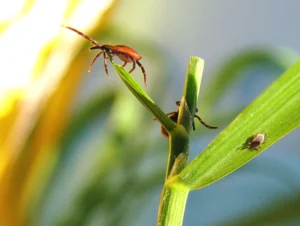
Image Source: Gulo in Nature
Most homeowners assume ticks vanish when summer ends. Here’s the truth: fall brings the most dangerous phase of tick activity.
Are ticks active in the fall?
You bet they are! Ticks remain active throughout autumn and winter as long as temperatures remain above freezing. Adult deer ticks become extremely active during the months of October and November. These persistent pests can survive in temperatures as low as 40°F, making them a year-round threat in many regions.
Unlike insects that hibernate, blacklegged ticks don’t take seasonal breaks.
Why are adult ticks more visible in autumn
Fall marks a critical change in the tick lifecycle. Those tiny nymphal ticks that fed during spring and summer have now grown into adult males and females. Adult blacklegged ticks are much easier to spot – especially the black and red-colored females hunting for blood meals.
Autumn’s cool, crisp weather creates perfect conditions for tick activity. Despite what many believe, frost doesn’t kill ticks. Many species remain active into December. This is particularly true, especially where thick plants retain humidity and warmth.
The role of deer and pets in tick movement
Deer serve as primary hosts for adult ticks, providing a blood meal before they lay eggs. Areas with more deer typically have more ticks.
Your pets become unwitting tick transporters. Dogs and cats pick up ticks simply by walking through wet leaves or taking woodland walks. While pets can get tick-borne diseases, they don’t directly pass infections to you. However, they bring infected ticks right into your home and yard.
Disease transmission takes anywhere from two to 90 hours, depending on the tick species. That gives these hitchhikers plenty of time to move from your pets to your family members.
Know Your Enemy: Fall’s Most Dangerous Tick Species
From blacklegged ticks to Pacific Coast varieties, fall brings peak activity for several dangerous tick species across North America. Knowing which ticks can harm your family and pets in autumn helps you protect them.
Blacklegged (Deer) Tick
The blacklegged tick (Ixodes scapularis) poses the greatest threat during fall months. Adult females are reddish-brown with black legs, while males appear completely dark brown or black. These dangerous pests become extremely active in October and November, with studies showing 41% of adult females testing positive for Lyme disease bacteria. They also transmit anaplasmosis, babesiosis, and Powassan virus. Blacklegged ticks remain active anytime winter temperatures exceed freezing.
Brown Dog Tick
The brown dog tick (Rhipicephalus sanguineus) thrives worldwide and can complete its entire lifecycle indoors. These reddish-brown pests primarily target dogs but will bite humans if canine hosts are unavailable. They spread Rocky Mountain spotted fever in the southwestern states and near the U.S.-Mexico border. Once established in your home, females can lay up to 5,000 eggs near baseboards, windows, and furniture.
Western Blacklegged Tick
Found primarily along the Pacific coast, the western blacklegged tick (Ixodes pacificus) becomes most active during fall months. This tick looks like its eastern cousin but has a longer body. It spreads Lyme disease, anaplasmosis, and Borrelia miyamotoi. Adult females frequently feed on humans, deer, dogs, and bears.
Rocky Mountain Wood Tick
This tick (Dermacentor andersoni) is found in the Rocky Mountain states and southwestern Canada. It thrives at elevations from 4,000 to 10,500 feet. It transmits Colorado tick fever, Rocky Mountain spotted fever, and tularemia. Adult ticks can survive up to 600 days without feeding and occasionally cause tick paralysis in humans and animals.
Pacific Coast Tick
The Pacific Coast tick (Dermacentor occidentalis) appears dark brown, with females displaying a mottled off-white shield. These ticks are common in California, except in very dry areas. They can transmit Rocky Mountain spotted fever and 364D rickettsiosis to people. Approximately 11% of adult Pacific Coast ticks carry Rickettsia phillipii, which causes Pacific Coast tick fever.
Reclaim Your Home from Fall Tick Invaders!

Image Source: Dreamstime.com
Fall tick activity is at its peak! It’s time to create defensive barriers around your home and pets. These persistent pests won’t give up easily, but you can stop them from reaching your family.
Keep Ticks in Fall Out of Your Home
Ticks hitch rides into your home on clothing and pets, then attack family members later. Create a 3-foot-wide barrier of wood chips or gravel between your lawn and wooded areas to stop tick migration. Mow your lawn regularly to a height of about 2 inches or shorter. Ticks struggle to survive in low humidity. Remove leaf litter and cut away undergrowth from trees and shrubs.
Tough on Ticks, Safe for Your Pets!
Products that kill ticks before they bite provide the best protection for your furry family members. Choose from topical treatments like K9 Advantix II and Vectra 3D, oral medications such as Nexgard and Simparica, or collars like Seresto. Dogs that have experienced seizures require additional care. So, talk to your vet before using preventives with isoxazoline.
Clean House = Tick-Free House
Wash pet bedding weekly in hot water to eliminate ticks, fleas, and their eggs. This prevents the spread of dangerous parasites and diseases, such as Salmonella and Leptospirosis. Vacuum carpets, furniture, and baseboards daily to remove eggs, larvae, and adult ticks.
Professional Tick Control That Works
Skeeter Beater has helped families reclaim their outdoor spaces from ticks throughout Barrington, IL, and surrounding areas since 2003. Our specialized treatments eliminate these dangerous pests and keep them from returning.
Choose professional tick control today! Work with a proven company that guarantees its services.
Reclaim Your Outdoor Space: Year-Round Tick Protection That Works
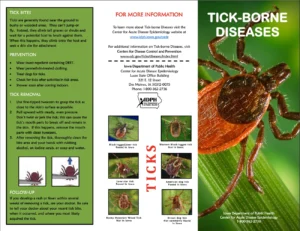
Image Source: Iowa’s Center for Agricultural Safety and Health – The University …
Just when you think tick season ends, these bloodsuckers keep coming back for more!
Knowing about tick activity throughout the year helps keep your family and pets safe when they least expect it.
Are there ticks in the fall and winter?
You bet there are! Ticks stay active whenever temperatures climb above freezing. Adult blacklegged ticks remain particularly busy throughout fall and survive winter when temperatures hit 40°F or higher. These pests don’t hibernate like other insects. They hunt for hosts whenever the weather is good!
What Makes Year-Round Prevention Worth It?
Warmer winters and unpredictable weather keep parasites active when you least expect them. Your warm home becomes their perfect hideout, where they thrive in carpets, furniture, and pet bedding. Additionally, many parasites remain dormant for months before striking when conditions improve.
No one wants to deal with tick problems during every season!
Reclaim Your Yard with These Proven Strategies
Create a tick-safe environment all year long:
- Clear away leaf litter and brush around your home
- Build a three-foot gravel barrier between lawns and wooded areas
- Keep grass mowed short and remove vegetation from yard edges
- Place kids’ play equipment in sunny, dry spots away from woods
- Get professionally applied permethrin treatments in spring and fall
Year-round prevention provides the best protection against tick-borne diseases, with no additional worry for you.
Choose consistent tick control to protect your family every season.
Say Goodbye to Fall Tick Worries!
Fall ticks pose serious threats that often catch homeowners off guard. These disease-carrying pests stay active in autumn. This puts your family and pets at risk whenever they go outside.
Don’t let these persistent invaders fool you! Ticks remain active when temperatures go above freezing. This makes them a threat even on mild winter days. Plus, they hitch rides on pets, deer, and humans, finding their way into your home no matter how careful you are.
It’s time to take back control of your property!
Your tick-fighting strategy needs multiple approaches. Keep your yard well-maintained by removing leaf litter, creating gravel barriers, and mowing the grass short. Protect your pets with year-round tick preventatives. Set up regular home routines. Vacuum often. Wash pet bedding in hot water.
Many families believe frost ends tick season – this dangerous mistake leaves them vulnerable. Smart homeowners adopt year-round prevention instead. Regularly check for ticks after outdoor activities. Wear protective clothing and keep your yard tidy. These steps greatly lower your risk.
Ready to reclaim your outdoor spaces from these bloodthirsty pests? You now know the truth about fall tick activity and have proven strategies to protect your loved ones. Regular prevention and awareness are the most effective ways to protect against ticks and the serious diseases they transmit.
Don’t let tick season catch you unprepared – take action today!
Related Reading
